In search of healthy and fun meals to feed my family, with an eye toward sustainable living.

Here you'll find recipes & ramblings about keeping my family fed with what's available in Alaska between local produce, a little bit of wild harvest, and the modern grocery store.

Monday, March 9, 2009

Strange and Wonderful Broccoli recipes


Here are a couple of mouth-watering broccoli recipes (which the husband would argue is an oxymoron right there -- he does not especially like broccoli -- probably the only thing he has in common with senior President Bush, who declared that when you become the President you don't have to eat broccoli anymore!) But I majorly digress, and I do like broccoli...

And I declare that I am on a MISSION to feed my family more veggies! So I'm on the lookout for recipes -- all kinds.

I have great hopes that peanut butter will lure the child who literally will eat anything with PB! And how about combining with chocolate?!? If you're desperate, and your children refuse to eat their broccoli (spinach, etc), you've gotta check out Honeypiehorse baking broccoli brownies for her girls!!! Hint: she does blend them first!


The following recipes are all from Mollie Katzen's book Vegetable Dishes I Can't Live Without, which I discovered at our Fairbanks friends' house, who by the way are excellent cooks and not afraid of vegetables one bit!


Broccoli dipped in Wonderful Peanut Sauce

1 bunch broccoli
1 c peanut butter (smooth -good quality)
3-4 T honey
1 c hot water
2-3 T soy or tamari sauce
2 t cider vinegar
3-4 t finely minced cilantro
salt, cayenne pepper, to taste

1. Blanche broccoli in boiling water for 2-3 minutes. Immediately rinse in cold water, shake dry. (Hint: If storing for future use, place in ziploc bags in frig.)
2. Place peanut butter & honey in bowl, add hot water and mash together patiently.
3. Add remaining ingredients. Peanut sauce can be stored for up to a week.
4. Serve together with with other veggies as a dip.

Broccoli with Garlic, dried Tomatoes and Lemon

1 bunch broccoli
3 oz dried tomatoes
2-3 T extra-virgin olive oil
1 t minced or crushed garlic
salt, pepper, to taste
1 T lemon zest

1. Blanche and cool broccoli spears.
2. Heat olive oil, then add all ingredients except last 2.
3. When broccoli is done to perfection, add lemon zest, salt and pepper. Serve immediately.

Broccoli, Apples, and Red Onion in Honey-Mustard Marinade
1 bunch broccoli
2 T cider vinegar
2 T Dijon mustard
1/2 minced garlic
1/4 t salt
2 t honey
5 T olive oil
3/4 c thinly sliced red onion
1 tart apple, thinly sliced

1. Blanche broccoli.
2. Put ingredients vinegar thru honey in bowl and whisk together.
3. Drizzle small stream of oil while whisking vigorously.
4. Cover vegetables with dressing & coat well.
5. Serve hot or cold -- can let marinade in frig for later (Hint: add apples when serving)

Saturday, March 7, 2009

Menu for early March


It's spring break!!!

Spring still seems a long way away here in Alaska -- but at least it's sunny & the skiing is excellent.

The frig is well stocked with produce from our CSA box. The big 4 from Alaska are potatoes, onions, carrots and cabbage. In addition, there's bok choy, broccoli, Romaine lettuce and spinach.

So here's our dinner menu for the week:

Monday: homemade Spaetzle(*) and goulash, sauteed bok choy, green salad.
Tuesday: Bubble & Squeak (*), beets (*), Mexican Quinoa salad (*)
Wednesday: leftovers
Thursday: Broccoli and beef stirfry, rice, Eggdrop Soba noodle soup with bok choy
Friday: pizza with pesto, garlic, pepperoni, artichoke hearts and feta cheese, spinach salad.
Saturday: left-overs "clean-out-the-frig"

Note to self: Teenage son stated strongly that "eggs do not belong in soup!" Otherwise, everything else on menu was a big success, even the Quinoa salad!

We're off on spring break -- North to sunny & cold Fairbanks!
Adios until next week.

Monday, March 2, 2009

Quinoa

Isn't the web a wonderful source for cooks? Used to be I hit the recipe books when looking for an inspiration, but when Eldest came home from college her first Christmas, she just kept her laptop in the kitchen for easy reference -- those modern kids!
Today I'm looking for some sort of a salad recipe that uses Quinoa, as I have plenty left over from a meal last week. So forget thumbing thru the old recipe books, most of which don't even have any entries in the index under Q!

First I found a delicious-looking recipe at a fun blog called Tea and cookies, but the ingredients it called for were too summery, and I want to work with what I got in the frig!
Next I came across this Mexican recipe with black beans, lime, cilantro and jalapeno on a website called the Savvy Vegetarian, she says "it's similar to Tabouleh, but quinoa is both heartier and sturdier than couscous. Quinoa black bean salad is a great one dish meal, and also goes well with crusty artisan bread or tortillas chips with salsa, guacamole etc."

Savvy Vegetarian's Mexican Style Quinoa Black Bean Salad
  • 1 cup quinoa
  • 1 1/2 cups cold water
  • 1/2 tsp salt
  • 2 cups cooked black beans. If using canned beans, drain and rinse well
  • 1/2 cup chopped celery
  • 1 jalapeno pepper, seeded and minced
  • 1 garlic clove, minced, OR 1 tsp garlic powder
  • 1 red pepper, sliced thin
  • 1 large ripe tomato
  • 1 green pepper, sliced thin
  • 1 tsp cumin powder
  • 1 tsp coriander powder
  • Dressing:
  • 2 Tblsp freshly squeezed lime juice
  • 1/4 cup olive oil
  • 1 tsp salt
  • Fresh ground pepper
  • Pinch cayenne or chili powder
  • 2 Tblsp chopped fresh cilantro
  • 1/4 cup chopped scallions
  • Optional: 1/2 cup sliced olives

Directions

  1. The quinoa can be made ahead of time and refrigerated
  2. Soak the quinoa 1/2 hour in cold water
  3. Rinse very thoroughly in water several times. For each rinse, pour off most of the water and finish draining through a large fine mesh strainer
  4. Place in 2 qt pot with 1 1/2 c. water and 1/2 tsp salt
  5. Bring to a boil, turn down to low, cover tightly, and cook for 15 minutes
  6. Remove from heat and allow to sit 5 minutes covered
  7. Fluff gently with a fork and set aside to cool.
  8. Saute jalapeno, fresh garlic, in 2 Tbsp oil until garlic is browned, pepper and celery are softened
  9. Add the green and red peppers and saute briefly
  10. Add the cumin and coriander, cook and stir 5 minutes
  11. Blend dressing ingredients with a whisk or shake in a jar
  12. Gently combine sauteed veggies, tomatoes, black beans, quinoa and dressing in a large bowl
  13. Adjust salt and pepper to taste. Stir in cilantro and scallions, and serve warm or cover and chill for later

Helpful Quinoa Hints:

  • Quinoa has high oil content, so should be stored in the fridge or freezer to avoid becoming rancid
  • A tight fitting lid is essential for even cooking
  • Quinoa is coated with saponin, which will give it a bitter taste unless you wash it very thoroughly - those tiny flaky bits in the rinse water are the saponin
  • Because of it's high protein and oil content, quinoa is a satisfying meal with a few nuts or beans and veggies added.
Thankyou, SavvyVegetarian, and now back to my own experiment with this meal:

I changed some of the ingredients around, using what I had at hand, but kept the basic premise of the recipe. I substituted garbanzo beans, skipped tomatoes (duh, it's Alaska in March!) but used delicious sweet Alaska carrots, added Sri Ratcha Sauce (a spicy red pepper sauce) and Maggi (ok, only a German understands this one).
The cilantro definitely makes this dish!
I also tried to slice my finger off! Yes, it was stupid -- this is a very vegan dish, after all!
But silly me tried to fancy-cut the carrot julienne-style. Lesson learned: don't be in a hurry with a sharp chef's knife!

Making Your Own Soup Stock

I make a lot of soups, especially during the cold season, which some would argue here in Alaska is every month besides July.

Making your own soup stock is really not difficult, and very rewarding. I have found that it does not take much time. Here's what I do:

Meat (chicken, beef, even fish): whatever bones, fat, or other trimmings, throw them in the freezer until there are enough to make stock. I keep a ziploc labeled "beef", another "chicken", and add to it whenever I trim something here or there. These are usually raw, but could also be the bones of a roasted chicken or turkey, or the barbecued T bones from T-bone steaks...
Vegetables (mostly roots, see "Suppengrün" below): I trim the end of the carrots, onions, etc., but that does not go into the freezer -- rather in a plastic bag in the vegetable drawer, instead of throwing them into the trash or compost. If I don't get around to making stock soon, and they get nasty, then the worms get them after all... On stock-making day, I also scour the vegetable bin for any limp carrots, celery etc., anything past its' prime!

In Germany, you can buy "Suppengrün" (literally greens for soup) at the farmer's market or in the grocery store. The French call it "mirepoix". It is usually purchased in a bundle and consists of a leek, a carrot and a piece of celeriac. It may also contain parsley, thyme, celery leaves, rutabaga, parsley root and onions. The mix depends on the region, but they are usually cold climate roots and bulbs with long shelf lives. The website Germanfood.about.com proclaims that Suppengrun vegetables and herbs "impart hearty, strong flavors to the soup or sauce, which makes them perfect foils for other strong tasting ingredients such as dried peas and beans or pot roast." In other words, my husband would say, anything to make lentil soup more palatable!

Here's my recipe:

Homemade Soup Stock
Stockpot full of cold water
meat scraps, frozen or thawed (optional) -- skip if vegetarian
celery root or stalks
carrots
leeks
onions
parslet, etc
peppercorns
bay leaves
Do NOT salt at this time! Wait until stock is done, or better yet, until making soup.

Bring to boil, then reduce and let simmer for several hours or all day (the big turkey carcass after Thanksgiving might go all night...). Length of time depends on the quantity and esp. the type of meat: beef goes longer than chicken, fish only 1/2 hour or so. Let cool until you're comfortable handling it. Pass through a sieve and fill in glass jars with lids. Refrigerate. A layer of fat will form on top, which acts as a seal. These will last several weeks in frig, but if you do want to freeze the stock, then remove fat and decant stock into plastic containers (leave enough headroom for expansion).
Hint: concentrated stock can be frozen in icecube trays, then transferred to ziploc bag. Then if you need just a little bit of stock for a recipe, grab an few stock-icecubes.

Sunday, March 1, 2009

Homemade German Spaetzle

To me, Spaetzle ranks as one of the top contenders for "womb-food" among the carbs. Right up there with mashed potatoes and freshly baked bread with a good crust!

Spaetzle is a very German dish most commonly associated with the region of Swabia (Schwaben). It's basically fresh homemade eggnoodles, and nothing store-bought compares to the REAL THING. It's not difficult, but it is a bit messy (be forewarned, ye neat-freaks out there!), and you gotta work fast.


The Swabians are a hardworking & precise people. To give you a taste, here's an anecdote my mother told me from when she was a young mom living in a small village near Stuttgart. A neighbor informed her that it was very obvious to the townspeople that my mom was not Swabian. "How's that?" she asked. "We don't see you airing out your featherbeds (down comforters) out your window or balcony. Every good Swabian housewife airs her family's bedding every morning!" So my mom promptly started airing out the comforters every morning. But soon she was pulled aside by the nosy neighbor again. "Just so you know, a good Swabian housewife has all the beds made before the church bells ring at noon!"

There are two schools of thought on how to make the perfect Spaetzle: Swabians insist the dough be prepared at 8 o'clock in the morning, and every time the cook passes it, she stirs it for 5 minutes, so that when she gets ready to cook the noon meal, the dough will produce perfect Spaetzle. On the other hand, the Austrian approach is more to my liking: "The lazier the cook, the better the Spaetzle!" If you can still distinguish some of the flour and eggs in the dough, they say, then you're making Spaetzle right.

I'll just list the basic recipe here, but for a detailed description of the process, go to Amiexpat's blog -- she has an ongoing weekly challenge of the "Real German Cuisine", and this week it was Spaetzle. Another handy website is germanfood.about.com

Basic Homemade Spaetzle

4 c flour (calculate about 1 c flour per person)

salt

4 eggs

1/2 to 3/4 cup water or milk

Mix ingredients well (I use a mixer). Amount of moisture needed depends on which method you use -- if pressing dough through holes, batter needs to be similar to a pancake batter, just a little stiffer. Have a large pot of salted water boiling. Add Spatzle by one of 3 methods:

1. spread dough (sticky, not too watery) thinly over wet cutting board, and cut noodles with knife. This is probably the most difficult method to master!

2. press batter through holes of a colander (large holes work best).

3. Use a Spaetzle-press or "Reibe". Here's a picture of what mine looks like: you push the dough back and forth over the holes directly into the boiling water.

Don't cook Spaetzle too long -- you'll want to take them out with a slotted spoon shortly after they've risen to the top. If you don't use them immediately, stir in some butter to keep Spaetzle from sticking together -- they will make 1 big lump otherwise!

You can serve Spaetzle with anything that calls for egg noodles. They're good with goulash or other sauces, can be used in soups, and are great tossed with pesto.


Cheesey Spaetzle Casserole

Onions

butter or oil

Swiss Cheese (Emmentaler), grated


1. Saute onion rings to golden grown. Have the oven pre-heating.

2. Layer a (buttered or oiled as needed) casserole with layers of freshly made Spaetzle, cheese and onions.

3. Bake at 400 F for 5-10 minutes until bubbly. Add more cheese and freshly grated pepper as desired.


Menu planning in late February


An Italian-American friend of mine once shared the following with a bunch of us on a girls-getaway weekend when we were discussing food: "I love eating, and I think about food all the time. When I wake up in the morning, I'm already planning in detail what I'm going to cook and eat..." Another shared that she'd rather not think about food at all, and is happy to eat most anything put in front of them, and would love not to have to cook and plan menus at all. My mother once confided in me that she found cooking family meals a chore: "Sometimes I would have to fix myself a strong cup of coffee before I could face the kitchen."

A cynic might say,
There are only 2 kinds of people (replace w/ housewives or moms?) in this world: those that plan and think about food all the time, and those that don't think about food until their stomachs growl (or their kids start whining...)

I actually fall somewhere between those extremes. I sometimes go for long periods of time without thinking a whole lot about food (especially when very busy at work, blogging, sewing or other creative endeavors), but more commonly I do think about food and meals frequently. I have to (!) as a mom, plus I enjoy eating, and I get grumpy when my blood sugar drops too low.

Can you remember what you cooked & ate this past week?
Do you know what's for dinner this coming week?

I don't usually plan meals in great detail, but now that we're getting our weekly CSA boxes, that is forcing me to become a little less haphazard in my menu planning. And by writing this blog, I'll hopefully have something to return to when I run out of ideas/ inspiration...

I started this past week with the overdue job of defrosting the big freezer, and discovered how low we were getting on meat. We're down to our last 2 packages of salmon (Wild Alaskan Sockeye), but I still have some of my smoked fillets left. It's good to eat all your harvest before going into next spring/summer, so I defrosted some salmon for us to eat.

Here's the emailed list of what our CSA box contained:

from Alaska’s Glacier Valley Farm and VanderWeele Farm:
Alaskan Yukon Gold potatoes | Alaskan carrots | Alaskan green cabbage | Alaskan onions

from Outside:
certified organic bunch beets with their greens | certified organic bok choy | certified organic leeks | certified organic broccoli | certified organic Fuji apples | certified organic navel oranges


Dinners this past week (* denotes recipe is posted on blog)
We always eat salad or other raw food (crudites such as carrots, etc) -- but I don't list them here.

Monday: Bubble & squeak (*) with turkey breakfast sausage.
Tuesday: grilled salmon marinated in ginger-soy sauce, quinoa, broccoli w/ hollandaise sauce.
Wednesday: leek & potato soup (*), panini w/ cheese and prosciutto ham.
Thursday: Eggs in a Nest (*), brown rice, beets w/ horseradish dressing (*).
Friday: Burritos w/ refried beans, beef & red pepper fajitas, cheese & avocado.
Saturday: Salmon chowder (made w/ leftover salmon, carrots, bok choy, corn).

Tonight I was going to make homemade Spaetzle and goulash, but we spent the afternoon skiing on the frozen river, and I admit to taking a delicious nap after skiing, so I just reheated some Chili con carne, and tried a new recipe for coleslaw. Recipes to follow soon...

Potato dishes


The lowly potato!
One of my favorite staples, being a good German Hausfrau (NOT)!!!

The Kartoffel is versatile, nutritious, and EVERYBODY in the family likes them!
So here are a couple of recipes that are popular in this Haus:


Roast Potatoes


Firm potatoes, such as red
other root vegetable: turnips, carrots, sweet potatoes (optional)
olive oil
salt, pepper
garlic
rosemary (optional)

Cut all the root vegetable to uniform size (approx. 1 inch cubes). Coat with olive oil and spices. Bake at 375 F until done (approx. 1 hour) -- We like to bake them uncovered, and let them get a good crust on!

Garlic Mashed Potatoes
potatoes (optional: leave the skin on)
salt
butter
garlic
milk or half-half
black & white pepper

I like to leave the skin on (much to my German mother's chagrin!) Wash the potatoes well, using a brush to get all the soil off. Remove any brown spots or where they begin to sprout. Boil potatoes in salt water until soft, drain. Heat butter and saute garlic. Mash potatoes with generous amounts of garlic butter, milk, salt and pepper. Remember, garlic is a vegetable, not a spice!

Heaven and Earth (German: Himmel und Erde)
This is a favorite dish from the Rhineland (Koeln), where my father and I were born. The name of this dish comes from the combination of apples, which are from above (heaven) and potatoes from below (earth). It's basically potato pancakes fried in butter, often served along with sauteed liver, roast lamb or mutton.

leftover mashed potatoes
butter
applesauce
salt, sugar, vinegar (to taste)

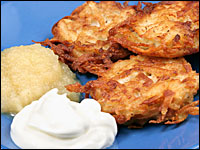
The original recipe is basically to mix it all together, and serve with browned butter on top. In our family, I often make mine more like Reiberdatschi or jewish potato latkes (like those pictured on the left), and serve with applesauce and optional sourcream. Yummy!

Bubble and Squeak
Traditionally served in England on Boxing Day (December 26th) with leftover meat.
Hint: Known to appeal to people who don't normally care for cabbage!

leftover mashed potatoes
other leftover veggies, mashed
onion, chopped
olive oil
green cabbage, thinly sliced
parsley, thyme & dill, salt

1. Heat the oil in a large skillet over medium heat. Add the onion and ½ teaspoon salt and sauté until golden, about 10 minutes. Then add garlic, and herbs and cook until softened, about 10 minutes.
2. Add the cabbage, another ½ teaspoon salt, and ½ cup water. Cover and cook slowly until the cabbage is tender, about 15 to 20 minutes, turning it occasionally. Add more liquid as necessary. When tender, uncover and raise the heat to evaporate some excess moisture, but it’s OK if it’s a little soupy.
3. Stir in the parsley and season with salt and pepper.
4. Mix the cabbage in with the mashed potatoes, and then fry in some olive oil.


Leek and Potato Soup
Leeks, washed well
spinach or other dark leafy greens (optional)
butter
potatoes
stock (chicken, beef, vegetarian) or plain water
grated cheese (Parmesan, Romano, or other)
dill
salt, pepper
cream or half-half (optional)
instant mashed potato flakes (optional)

1. Cut leeks in rings and saute in butter (I save the ends and darker ends & outer leaves for making stock -- I'll post something on making homemade stock soon!).
2. Add potatoes, remaining vegetables and stock. Cook on low until potatoes are soft. OK to let it cool at this stage. I often do this part early in the day, and finish soup later.
3. Puree in blender. Reheat.
4. Add grated parmesan cheese and spices to taste.
5. Shortly before serving, add some cream if desired (don't boil).
6. If some thickening of the soup is desired, add some instant mashed potato flakes -- it's an easy way to add substance to a soup without needing to use flour or starch.