In search of healthy and fun meals to feed my family, with an eye toward sustainable living.

Here you'll find recipes & ramblings about keeping my family fed with what's available in Alaska between local produce, a little bit of wild harvest, and the modern grocery store.
Showing posts with label potatoes. Show all posts

Sunday, March 25, 2012

Cooking in a Römertopf (Clay Cooker)


My eldest daughter is turning 25 this week, so I gave her a Römertopf plus a couple of smoked chickens for her birthday. To our family, Sunday afternoon isn't complete without the aroma of a smoked chicken or roast coming from the oven -- at least in the cold season (which feels like most of the year, given we still have several feet of snow on the ground right now!).

Here are some recipes I translated for her from the french pamphlet inside -- who knows why they were not in German or English? But I had fun, and only had to look up 1 word! I found it funny how many of them were "Borealkraut-style" in that they gave no quantities at all!

To me, cooking in the Römertopf is the epitomy of simple home-cooking. The ingredients are nothing fancy, but the rich flavor comes from the slow cooking/steaming that intensifies in the the juices.
I've taken to picking half a dozen organic chickens at a time when I'm at Costco, which I brine (1 c each of salt and sugar dissolved in 1 qt water) and smoke. I vacuum-pack and freeze them, then take out a chicken midweek to thaw out in the frig. It's good for at least 2 meals-- we eat Roast Chicken on Sunday, then I cook the carcass into stock and serve chicken and dumplings mid-week (but I have to hide the left-overs in the frig so my husband eat them all)...


French Onion soup

6 big onions

2 cloves garlic

30 ml butter

1 ml dried thyme

310 ml beef stock

250 ml white wine

salt, pepper

6 slices french bread

250 ml freshly grated parmesan

250 ml grated swiss cheese

Soak clay cooker for 15 min. Meanwhile, sauté the onions in butter (or oil). Place in clay cooker, cold oven, and heat for approx 1 hr at 200C, checking and stirring onions occasionally, until nicely browned. Add thyme, beef stock and wine, and return to oven for another hour. Add salt and pepper to taste.

Before serving, toast the bread, place over soup with grated cheese and return uncovered to oven at 230C for 10 minutes, then increase to 290, broiling until cheese is bubbling, around 2 minutes.


Roast Beef

1 roast (your preference of cut, approx 1.5 kg)

salt, pepper

potatoes

onions

carrots

parsley

bay leaf

red wine, optional

Soak the cooker. Salt and pepper the roast. Place in cooker, together with all the other ingredients around it. Cover and place in cold oven. Bake at 250C for 40-90minutes, depending on cut and desired doneness.


Römertopf Meatloaf

450 g ground beef

250 g bread crumbs

250 ml milk

1 egg

25 ml dried onion powder

24 ml tomato paste

15 ml horseradish

5 ml salt

5 ml pepper

potatoes (optional)

Soak the cooker. Mix all the ingredients. Shape into loaf and place into the cooker. Cover and place in cold oven at 230C for 75 min. It’s good to place cut potatoes under or around the loaf to absorb the juices.


Country Roasted Chicken

1 chicken (approx 1.5 kg)

salt, pepper

1 onion

parsley

celery leaves

butter (optional)

thyme

white wine (optional)

vegetables cut small (potatoes, carrots, onions, etc)

Soak the cooker. Clean the chicken, and fill the cavity with onion, celery, salt, pepper.

Place in cooker and optionally rub with butter. Add vegetables and wine, as desired.

Cover, place in cold oven and bake approx 85 minutes at 230C.

If desiring a crust on the chicken, remove vegetables and juices (for gravy) and return to oven uncovered until browned as desired.


Potpourri of savory vegetables

Zuccini, tomatoes, onions

Salt, pepper

Parmesan cheese

Soak cooker. Peel and cut vegetables (not too small). Put all ingredients in cooker, cover, and place into cold oven. Cook at 230 C for approx 30 minutes – cooking time depends on size and quantity of vegetables.


Baked Fish Fillets

900 g fish fillets (fresh or previoulsy frozen)

mustard

lemon juice

salt, pepper

paprika

fresh chives, chopped

Soak the cooker. Spread mustard over fish fillet and place in cooker, and sprinkle remaining ingredients over them. Cover and place in cold oven, bake at 230C for 30-40 minutes until fish is done.


Baked apples

6 medium apples

butter

sugar

cinnamon

raisins

pecans, chopped

125 ml white wine

15 ml rum essence

Soak the cooker. Mix sugar, cinnamon, raisins and pecan in a bowl for filling. Wash and core the apples (don’t peel). Spread butter on apples and place in cooker. Place filling in each cavity. Pour in wine and rum essence. Cover and place in cold oven and bake at 230C for approximately 30 minutes until apples are tender. Serve with the delicious juice.

(My mom's variation “Apfel im Schlafrock” or Apple in evening robe: encase each apple in phyllo dough and bake on sheet. Serve with whipped cream -- it was our favorite dessert when I was growing up!)

Wednesday, December 29, 2010

Potatoes/ Kartoffeln

Potatoes are one of the "workhorses" of my kitchen. We get Alaska-grown potatoes in our CSA box every week, plus I (try to) grow my own every summer.

Given that potatoes are from the New World (a.k.a. America), how did potatoes become so prevalent in European cuisine? Here's a little background from Germanfood.about.com:
Potatoes are a large part of German culinary culture, even though they didn't appear on the German table until 1716. Their earliest introduction was a half century earlier in Bavaria, but they were thought to be poisonous, so the peasants wouldn't adopt them until Karl V ordered them to grow and eat potatoes or have their noses cut off.
My favorite potato to have around are red potatoes, which are waxy or "fest-kochend" in German, which means they are low in starch and hold together well after cooking:
think German potato salad (my recipe here). And I prefer smaller sizes to the HUGE American monsters. I save them for roasted potatoes (see my recipe here).
The most common way that a German housewife serves her every-day potatoes is:

Pell-kartoffeln (peeled potatoes, cooked in their jackets)

whole potatoes (red or other waxy), small or medium-sized, washed
water (barely covering potatoes)
salt
optional: butter, fresh parsley

Boil potatoes for approximately 20 minutes, or until fork prick test indicates doneness.
Drain the water and return pot onto stove (without lid if ready to serves soon) to let skins dry.
Peel one potato at a time by holding on a fork while removing skin, using a small paring knife to make a cut and then remove all the peel. This is a somewhat time-consuming task right when the cook is busy getting all the other dishes ready for the table. Sooo-- this very boring but necessary task is often delegated to children, husbands or other bystanders with nothing better to do. Digression: Forgive my stab at men ("husbands and other useless bystanders")! Men are great cooks and account for probably 50% of my readers , but growing up in Germany, I never saw a man actually cook anything! In fact, when my dad retired, the only dish he knew how to cook was Pell Kartoffeln, which he likes to eat with Quark. I doubt his repertoire has expanded much -- it is still his favorite dish!

Optional: coat in butter and sprinkle fresh parsley over them.

For tips on growing potatoes, here are a couple of articles to consult come springtime:

http://gardening.about.com/od/vegetables/p/Potatoes.htm
http://www.the-organic-gardener.com/growing-potatoes.html
http://tipnut.com/grow-potatoes/

The last is a really cool method for growing potatoes vertically:

Tuesday, June 29, 2010

Rock'in Moroccan Stew, doubled

While researching recipes for dehydrated foods for backpacking, I came across a blog dedicated to cooking for the trail -- backpackingchef, where among many useful tips about processing and dehydrating veggies, fruit, even meat, I also found this recipe for Moroccan Root Stew.

I've modified it slightly to fit my needs, including what to do with the rich stock.

Step 1 (Stew for Dehydrator)
teensy bit of olive oil
onions, chopped
garlic, minced
jalapeno or other pepper, minced (depending on how hot you like it)
curry powder
cumin powder
cinnamon
1 can diced tomatoes
stock, as needed
root vegetable, cut in cubes of 1 inch or so: parsnips, turnips, rutabagas, carrots, beets, etc.
sweet potato or yam (cubed) -- stay away from potatoes, as they don't rehydrate well
optional: chickpeas or lentils

Saute first few ingredients until translucent, add spices, then rest of ingredients. Barely cover veggies with liquid, and cook until just softened. Let cool, then drain thru sieve. Save the stock!
Place root veggies in dehydrator (best if not touching much), and dry overnight.

When dry, package in ziploc bag, and add:
raisins or apricots
candied orange peels
dried jerky beef, chopped finely (optional)
Separately, package couscous (approx 1/2c per person)

Step 2 (Stew for home consumption)
generous amount of olive oil
onions, chopped
garlic, minced
celery, chopped
cubed meat, such as beef or lamb
stock from step 1
potatoes and/or Yams, cubed
carrots and other veggies that hold up well in stew, such as corn
optional: raisins, chickpeas
water or additional stock as needed
Sri Ratcha or other hot sauce, as desired
Oranges (see this recipe from Epicurean.com)
parsley, mint

Saute veggies and meat in olive oil. Add stock and vegetables, and cook until everything is done. This stew does well in crockpot or simmering on stove for flavors to blend.
Serve over couscous or with flat bread.

Step 3 (meal on the trail)
You can start re-hydrating stew with cold water, roughly 1 c water per cup of dried ingredients.
Or heat water, fix couscous first, then cook stew for about 1o minutes, add couscous and let sit another 10+ minutes until thickened (keep warm by keeping lidded and wrapped with something so it won't cool down).

Tuesday, May 18, 2010

Scandinavian supper

When we traveled through Denmark and Norway a number of years ago, we noticed something:
everything on the dinner plate was white (or yellow in the case of potatoes), with green being the only actual "color".
Last night, for Syttente Mai (17th of May), we celebrated Norwegian independence with:
Alaskan cod, baked in parchment with herb butter
roasted potatoes
spinach with onions and cream
asparagus

Sorry, no picture -- but it did look lovely, and was rather tasty and healthy, too.
Say a great big Hurrah for Syttente Mai, and take a swig of Aquavit!

Friday, February 12, 2010

Sourdough Potato Bread

Potatoes are a great addition to bread-baking, and I happen to have some left-over mashed potatoes in my frig.

I want to make up my own recipe, preferably with a sourdough component.
So, let's see where the thought-process and experimentation leads!

I could start with the absolute basic bread recipe: 3 cups flour, 1 + a little cups of water, 2 teaspoons yeast, 2 teaspoons salt. Replacing between 10 and 30 percent of the flour with mashed potatoes should make a nice, moist loaf of potato bread.
One has to be careful, though: potatoes are considerably lower in gluten than wheat, so adding too much potato may result in a dense, moist loaf that resembles mashed potatoes more than actual bread! I've read that 1/2 cup potatoes to around 3 cups flour is about right.

What else could I add? Some fat is nice, and it makes the bread last longer too. Butter, oil or even sour cream is good. For flavor and an extra kick, I think I may add some roasted garlic and/or bacon bits too! And if my chives weren't under 2 ft of snow, I'd snip some and add them as well.

Last, I want to add my sourdough starter, Pedro. Probably should reduce the yeast , and allow for a slower rising process.

So here it is:
Potato Sourdough Bread
1 c sourdough starter, fed w/in last 12 hours
1 t active yeast, dissolved in
1/4 c warm water
optional: 1 t sugar
3 c flour, approx.
2 t salt
1/2 c mashed potatoes (skin, salt pepper, butter, etc are all fine)
1 T butter, oil or bacon fat
optional Flavors: bacon, chopped into bits
roasted garlic, mashed
chives or other fresh herbs, chopped

place sourdough starter in large bowl, add about 1/2 c flour and stir.
Meanwhile, dissolve yeast in warm water, add sugar, and when foaming, add to sourdough mix and stir. If mashed potatoes are cold, warm them up before adding to bowl. Stir in salt, optional flavors, fat and flour, 1/2 c at a time, until cannot stir anymore, then transfer to counter and knead dough until "feels right" -- this will be stickier than regular bread, so don't overdo it!
Note: I made a double batch and had a little less than 1 c flour left over.

Let dough rest and double (takes approx 1-2 hours).
Punch down and knead again (but gently) -- best to pull and fold rather than hard kneading.
Let rise again until double (at this point, could place in frig to "retard" and continue next day).

Punch, knead, and place in loafpan (or free-form) to rise.
Bake at 400F for approx 1/2 hr -- adding steam in first 10 minutes will make for crunchier crust!

Note from testing-round 1: this bread got rave reviews -- it rose quite well and fast (I did not retard dough in frig), and can probably be made with less or no yeast, and/or more potatoes...

photo credit: http://www.freefoto.com

Sunday, November 29, 2009

Roasted veggies

My new favorite way to fix veggies is to roast them. Flavors are intensified when veggies are roasted instead of boiled.

Here are a few simple recipes -- perfect for this time of year when I love to bake, and the oven is a welcome source of heat and good smells!

Note: Use oils that can take the heat: I use "light" olive oil-- not the extra virgin which smokes when heated -- I save that for salad dressings and drizzling.

Roasted Red Potatoes w/ Garlic
(Wolf's Favorite)
Red potatoes, skin on, washed, dried and cut into quarters
Olive oil
Salt, pepper
fresh squeezed garlic
Rosemary, optional

Toss the taters with oil and spices, then roast in 375/400F oven for a good long while (depends on how done and shrivelled you like them -- at least 30 min, preferrably 45.

Roasted Sweet Potatoes
sweet potatoes or yams, peeled and cut into cubes
oil
S&P, as desired
Optional: slivers of either onions or orange, for extra flavor

Toss and roast in oven --takes a little less time than potatoes.

Roasted Carrots
carrots, cut into big chunks
butter (or mixture of butter and olive oil)
balsamic vinegar, optional
brown sugar or maple syrup (Thanks, Patty P!) -- add near the end to prevent scorching

Toss and roast in oven. This takes less time than you think (less than potatoes) -- check w/ fork.
Note to self: don't bake in cast-iron pan -- gets too hot and burns.
Here's a great description from Chef Doughty on how to glaze carrots on the stove-top for a similar result. Carrots never tasted this good in the old days of boiling...

Roasted root veggies and sausage
Olive oil
Onions
Potatoes
carrots, turnips
celery root
beets
green beans or other green veggies that don't go mush!
Optional: sausage, such as Kjelbasa or Reindeer sausage

Cut up veggies, not too small. Potatoes can be smallish cubes, but keep faster-cooking veggies sized a little larger. Fry up the sausage, using oil as needed. Add veggies, coating well with oils.
Roast for 30 minutes or so...

Roasted cauliflower
Cauliflower, cut into florets
olive oil
curry spices
S&P

There are lots of other veggies that do very well roasted:
Jerusalem Artichokes
Brussels Sprouts
Asparagus
squash (summer or winter varieties --cooking times vary greatly)
Beets
Celery Root
Mushrooms

Toss with a good oil (light olive oil or one of the nut oils, such as walnut or hazelnut), and experiment with spices (oregano, thyme, basil, fennel, even wasabi or mustard) -- but often best plain.

Wednesday, October 28, 2009

The British Isles


This week's theme seems to be evolving into the cuisine of the British Isles. We have a ton of potatoes (after finishing our own harvest of red potatoes, I stocked up with a big sack of Valley-grown, organic, absolutely delicious "German Butterballs"). There's lots of cabbage around, of course, and there have been repeated calls for Bubble & Squeak, a British dish that combines potatoes and cabbage.
I had to promise the Prof that there would be no Haggis, but maybe Bangers and Mash..?

We started with corned beef on Sunday. From the left-overs, I made a family favorite: Gimme-More-Pie, my own invention, and named by a bunch of kids calling "Gimme more pie" at the dinner table several years ago...

Gimme More Pie
any good piecrust, doubled, so there's a top too!
left-over meat, cut into small pieces (roast beef or corned beef)
left-over vegetables, cut up (carrots, potatoes, other firm vegetables)
left-over gravy
onions, spices (garlic & onion powder, thyme, etc), salt & pepper

If I don't have enough left-overs to put into the pie, I add more as I cook this!
Saute onions, add vegetables and meat, spices, and gravy (if necessary, I cheat and use a gravy mix). Taste, and add spices as needed or desired. Let filling cool.
Prebake piecrust, if desired.
Fill pie and cover with extra crust. Cut slits for steam to escape (if you want to get fancy, cut our shapes with cookie cutter). Bake at 375 Fahrenheit until crust is done (approx 35-45 min).

Other main dish pies that come to mind are Shephard's Pie -- similar idea, but replace the topping with mashed potatoes (sometimes cheese is added).

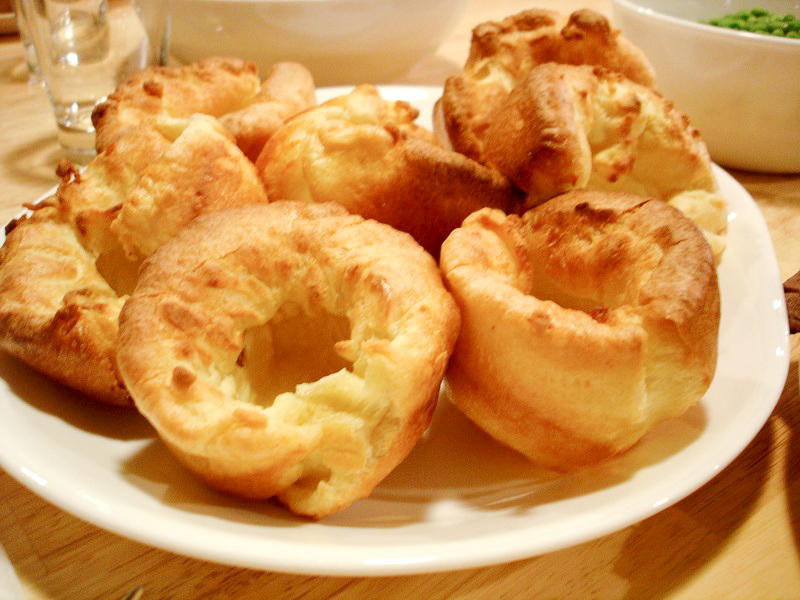
Yorkshire Pudding
Bread-like accompaniment for British main meals. These are made from a batter similar to pancake batter (flour, eggs, milk) and cooked in hot grease or meat drippings. It really is very similar to what Americans call Popovers.
My recipe is:
1 cup flour
1 c milk
3 eggs, beaten
optional: grated cheese, such as Parmesan
salt
melted butter for muffin tins

Bake 1/2 hour in hot oven (400 F), no peeking!

Irish Stew
An Irish stew would have beef (or mutton) and lots of root crops: potatoes, carrots, celery, onions, turnips, etc.
Making stew is so easy, and so satisfying -- use good stock (see here for my post on homemade), and don't forget the bay leaves!

Irish Soda Bread
Soda Bread recipe from Recipesource.com
3      cups          Unbleached white flour
2 teaspoons Baking powder
2 cups Raisins
1 teaspoon Baking soda
1 Egg
1/2 teaspoon Salt
1/2 cup Honey
12 tablespoons (1 1/2 sticks) sweet butter, cold
1 cup Buttermilk

Makes 1 large loaf.

Preheat oven to 350F.

Sift the flour, baking powder, soda and salt into a large mixing bowl. Cut
the butter into small pieces and add. Cut it into the flour with a pastry
blender until the mixture is the size of peas. Add the raisins and toss to
distribute evenly, using two forks.

Beat the egg in another bowl until very frothy. Beat in the honey. When
it is well blended, beat in the buttermilk.

Gradually pour the liquids into the flour, tossing all the while with a
fork so the mixture gets evenly moistened. Continue tossing lightly with
two forks until the batter comes together; it doesn't have to be completely
mixed and should be very rough and lumpy.

Butter a heavy skillet or casserole, 10 to 11 inches in diameter and 2 to
3 inches deep. Round is the traditional shape. Spoon batter out into the
pan and push it gently to fill the pan. It can mound up somewhat in the
middle. Bake at 350 F about an hour or until the middle is set. Cut out a
piece to test if necessary.

Cut into wedges and serve warm from the pan.

The Garden Way Bread Book From the collection of Jim Vorheis

Tuesday, October 13, 2009

Hot German Potato Salad

This weekend we're hosting our annual Oktoberfest to celebrate 2 family birthdays: 12 years ago our youngest pixie arrived exactly one week before her Papa's Birthday "the best Birthday present I ever got", as he's fond of telling his little girl!

Of course, there are about as many potato salad recipes in Germany as there are Germans, and they vary widely from region to region.
Here's a recipe from Paul Prudhomme's Seasoned America cookbook for
Hot German Potato Salad
seasoning mix:
1 t dry mustard
1 t onion powder
1 t garlic powder
1 t white pepper
1/2 t black pepper
1/2 t salt

20 unpeeled small red new potatoes
4 hard-boiled eggs
8 slices bacon, chopped
1 c onion, chopped
1 c celery and/or bell peppers, chopped (my addition -- I like lots of veggies in this)
1/4 c flour
1 c chicken stock
3/4 c distilled vinegar
1/2 c sugar (I use a little less -- just check the taste as you make this)
1/2 c green onions or chives

Boil potatoes until just tender (about 5 minutes from when water starts to boil). Drain, cool and slice into large bowl.
Meanwhile, saute bacon. Remove bacon with slotted spoon, and saute onions & veggies.
Add seasoning mix and whisk in the flour. Slowly add the chicken stock (careful about splashing), vinegar, sugar. Stir and cook until thickened to desired consistency (Turn on the fan!)
Pour hot sauce over the potatoes and fold it in. Add chopped hardboiled eggs, reserved bacon and green onion/chives.
Best when served warm or at room temperature, not cold!

Tuesday, May 12, 2009

Oui, oui: French cooking

Oui, even this German Alaskan will cook French food occasionally.
The husband has requested there be more, and ever since I've come across Kim's wonderful blog, Easy French Food, I've been happy to oblige, venturing (slowly) beyond the Alsace-Lorraine region that borders my German homestate of Saarland...

First, here's the main dish, QUICHE LORRAINE, truly a classic (makes great leftover for breakfast or lunch)!

Quiche Lorraine

  • 1 pie crust, baked for 10 minutes at 400°F
  • 8 ounces cooked bacon, drained and crumbled
  • vegetables are optional: mushrooms, broccoli, etc (sauteed or steamed briefly)
  • 1 cup diced Swiss cheese
  • 4 eggs
  • 1 and 1/2 cups whipping cream(or half-half: bake longer!)
  • 1/4 teaspoon nutmeg
  • salt, pepper
Evenly sprinkle bacon and Swiss cheese on bottom of cooled pie shell.

Beat eggs with whipping cream, nutmeg and salt and pepper. Pour on top of bacon and cheese.

Bake at 400° F for 30 minutes.

ALIGOT (Cheesy mashed potatoes)

You need to go here to find the recipe -- as you can see from Kim's description, her recipes come with wonderful background information:

Like many traditional French foods, there is a legend to go with these cheesy mashed potatoes. Aligot was supposedly first concocted by three bishops who had met up at the geographic point where their respective dioceses met. When it came time to eat, they prepared a meal with a little bit of what each had brought along: cheese for the first, potatoes for the second and milk for the last. Although they met more then 1400 years ago, you will still find a cross at the junction of the French departments of Lozère, Aveyron and Cantal that evokes this legendary encounter.

Last, but not least, the green salad (Europeans often eat salads after the main course, in fact)

Pear and Blue Cheese Salad

Kim's recipe is made with a hot dressing! Use a mix of greens that include arugula -yummy!

Arugula is one of my new favorite salad greens -- it has a great spiciness to it.

Another great idea I want to try soon is to add grilled red onions and roasted peppers (see GG#27)

Sunday, May 3, 2009

Frankfurter Gruene Sosse

I've been having a real hankering for a dish my grandmother used to make in spring or early summer.
She grew some of the herbs herself, but they were also sold at the farmer's market.
This is a regional Hessian dish, and she insisted on a certain mix of 7 green herbs, but
I'll need to improvise, and use what I can find here in Alaska!

Here are some of the recipes I found:
First in German (I love the names of the herbs!) with a little background & history:
traditionally eaten on maudy Thursday (called "Green" Thursday in Germany), this dish
dates back several hundred years (Goethe's mom cooked it), and is perhaps based on
a french vinaigrette, to which the germans added sour cream.

  • Man nehme:
  • Petersilie
  • Schnittlauch
  • Kerbel
  • Sauerampfer
  • Dill
  • Borretsch
  • Kresse
  • Estragon
  • Liebstöckel
  • Zitronenmelisse
  • 2 Zwiebeln
  • 4 Eier, hartgekocht
  • 1 Esslöffel Essig
  • 2 Esslöffel Öl
  • 1/4 Liter Schmand o. saure Sahne
  • 150 Gramm Joghurt
  • 1 Prise Zucker
  • Salz
  • Pfeffer

Alle Kräuter (ca. 300 g) verlesen, gründlich waschen und abtropfen lassen. Zusammen mit den abgezogenen Zwiebeln recht fein wiegen oder hacken und in eine große Schüssel geben. Mit Essig, Öl, Schmand und Joghurt verrühren, mit Salz und Pfeffer würzen. Zugedeckt an einem kühlen Ort mindestens! 1 Stunde durchziehen lassen. Danach die hartgekochten Eier grob hacken und unterrühren. Nochmals mit Salz, Pfeffer und eventuell etwas Zucker abschmecken, etwa 15 Minuten durchziehen lassen und zu Pellkartoffeln servieren.
Info: Für die berühmt gewordene Frankfurter Grüne Sauce, die in ganz Hessen bekannt ist, gibt es unterschiedliche Zubereitungsarten. Man kann z.B. die hartgekochten Eigelb auslösen, durch ein Sieb streichen, zunächst mit Essig und Öl verrühren und erst dann alle anderen Zutaten unterrühren. Es gibt auch Rezpete nur mit Öl anstelle der sauren Sahne. Unser Rezept ist ein seit vielen Jahren bewährtes und beliebtes Familienrezept. Unerläßlich ist in jedem Fall die Mischung aus mindestens sieben frischen Kräutern. Im Frankfurter Raum werden die Kräuter in der richtigen Zusammensetzung im Frühjahr und Sommer fertig abgepackt auf Wochenmärkten und in Gemüsegeschäften als Frankfurter Grüne Soße angeboten. In vielen Familien ist die Grüne Sauce zusammen mit Pellkartoffeln das traditionelle Essen an Gründonnerstag. Sie schmeckt aber auch hervorragend im Sommer zu kaltem gekochten Rindfleisch oder Fisch. Man kennt diese Sauce in Frankfurt bereits seit mehr als hundert Jahren. Schon Goethe soll sie bei seiner Mutter, Frau Aja, ganz besonders gern gegessen haben. Ein gedrucktes Rezept erschien zum ersten Male 1860 in dem Frankfurter Kochbuch von Wilhelmine Rührig. Der Ursprung dieser Sauce geht vermutlich auf die französische Sauce vinaigrette zurück, die von den Frankfurtern mit ihren heimischen Küchenkräutern und später auch saurer Sahne angereichert wurde.


FRANKFURTER GRUENE SOSSE (Green Sauce from Frankfurt)
3 c Mixed herbs (parsley,
-chives, chervil, borage,
-dill,
Spinach greens, watercress,
-tarragon, basil,
Pimpernel)
1 c Sour cream or plain yogurt
2 sm Onions. coarsely chopped
2 tb Cream
2 tb Mayonnaise
3/4 c Low-fat cottage cheese
-(pressed through a fine
-sieve
In order to smooth curds)
Ground white pepper
Small pinch of sugar
1 To 2 eggs, hardboiled and
-coarsely chopped

Choose all or merely a selection of the herbs and
greens mentioned in the list of ingredients (using the
tarragon more sparingly than the others.) Wash them
thoroughly and drain on paper towels. Coarsely chop
the greens; loosely packed, they should amount to
about 3 cups altogether. Take 2 cups of the greens,
combine with the sour cream or yogurt and the onions,
and puree in the blender or processor; add a few
tablespoons of cream if it doesn't seem to be fluid
enough. The rest of the greens should just be finely
chopped and stirred in a mixing bowl with the puree in
order to give the sauce a little bite. Stir in as much
mayonnaise and low-fat cottage cheese as it takes to
produce a smooth, creamy sauce.

Season with salt, pepper, and a very little sugar.
The hardboiled eggs can either be mixed in with the
sauce or strewn over it as a garnish.

Makes 2 - 3 cups.

From: THE CUISINES OF GERMANY by Horst Scharfenberg
ISBN 0-671-63197-7. Poseidon Press, Simon & Schuster,
New York. 1989. Posted by: Karin Brewer, Cooking Echo,
7/92

FRANKFURTER GRÜNE SOSSE
(Frankfurt Green Sauce)

parsley, one bunch
chives
chervil
cress
pimpinelle
sorrel
borage
4 eggs
4 small potatoes
100 grams of sour cream
100 grams of curd
125 grams of yogurt
2 cloves garlic
1 tablespoon mustard
Juice of one lemon
salt and pepper

Pick and wash herbs and cut them finely. Boil the eggs (hard) and the potatoes. Mix the curd with the yogurt, add salt, pepper and mustard then lemon juice. Mix with the herbs. Let the eggs cool, then cut them into small pieces and add them to the herb mixture. Serve with the potatoes while they are still warm. Serves 2.

Saturday, May 2, 2009

Kofta-kabobs & variations

My husband (the Swede who must have been Cajun in a previous life as much as he likes complex and spicy foods) reminded me of a wonderful recipe book that I have not consulted in a long time, and he specifically requested I make Kofta kabobs. He claims to have made these in his younger days...

Now compared to the rather boring fare of plain hamburgers (which I admit I don't especially like) , this is a dish worthy of ground meat!

This is a great little recipe book featuring "unique innovative recipes from the world's fiery cuisines", where you'll find something from just about every continent. I'm having fun re-discovering this little gem, and will likely be cooking more dishes featured in there.


Kofta Kabobs (Middle Eastern meatballs or patties)
From Marlena Spieler's "Hot and Spicy".

1 pound ground beef or lamb
1-2 slices bread, soaked and squeezed dry (or breadcrumbs, leftover rice, etc)
3-5 cloves garlic,chopped
2 T plain yoghurt
1 t cumin
1 t paprika
1 t Middle Eastern spicemix or curry powder
pinch of cardamon or turmeric
1 t tomato paste
1 t hot salsa
salt & pepper to taste
additional suggestion: fresh herbs like parsley, chives

Mix all up, and fry, broil or grill (on skewers as in picture above). Traditionally served in pita bread with yoghurt, cucumbers, raw onions and tomatoes.

Variation: Kofta-filled stuffed potatoes
Boil or steam whole potato until tender yet firm. Hollow out, and fill with meat mixture. Bake for approx 30 minutes at 375 F -- check that meat is cooked throughout.

Tuesday, March 24, 2009

Indian Cooking

Indian food and I go way back to my college days -- I hung out with a bunch of International students when I was an Granola-head undergrad at Duke University, and before you know it, I was wearing a sari and learning how to REALLY cook vegetarian food!

I'll never
forget my first lesson in mixing my own batch of curry. I had watched my various Bengali and Gujurati friends cook, and thought I was ready to give it a try. SOOOO, I started throwing in the spices into the pan, then added the vegetables. The supervisor of the day was Dhiren (later my boyfriend), and he tasted the batch right after I had added the veggies, and declared it inedible: "Many mistakes can be fixed, but not the overuse of turmeric!" He then unceremoniously dumped all the vegies into a colander, rinsed the spices off, and had me start over!

I love Indian food, and even though I now do not often have the time to cook a whole Indian meal with lots of courses, but I do enjoy cooking a feast on special occasions (Alas, not many of our American friends seem to appreciate this cuisine, being sceptical of anything too foreign or spicy -- I think they're missing out!)

My bookshelf includes Madhur Jaffrey's Foods of India, which my husband bought for me after I kept on checking it out from the library over and over -- he figured it was cheaper than paying the overdue fines... This is one of those recipe book with lots of gorgeous pictures that makes you just want to pack your suitcase and travel to that country!

And now for some recipes. First of all, there's the staple of all Asia:
rice. Cooked plain, or with just a tad of butter (ghee) and a few select spices. There's a huge variety in flavors added, such as onion, garlic, lemon, tamarind, coconut, etc. (NOT all in the same recipe, mind you!!!). But first, you gotta know the basics of cooking rice, and I point you to a wonderfully written account by my Philippine friend Megatonlove in her post entitled Prat du jour -- she's a new blogger and wonderfully talented writer!

Here's a new recipe I intend to try out soon:

Cashew Rice

A recipe from Northern India, from in Indianfoodcooking.com

Rice 2 cups
Cashew nuts, roasted and powdered 3 tbsps.
Salt to taste
Dry grated coconut 2 tbsps.
pinch of turmeric powder
pinch of asafoetida
Mustard seeds 1/4 tsp.
2 red chillies
Oil 2 tbsps.
few corriander leaves (we call this cilantro)

METHOD
Heat oil. Add mustard seeds, red chillies and asafoetida. Next add the cooked rice and the remaining ingredients. Mix well. Sprinkle chopped corriander leaves. Serve with cheese curd.

AND SOME NEW RECIPES TO TRY:
And the next couple of vegetable recipes are from Glaciervalleycsa.com --their wonderful recipes can be found in their weekly publication the Glacier Grist. Go down to the bottom of the bar on the left side and click on the issue number listed for the recipe (there is also an index to all their wonderful recipes).

Indian diced potatoes with greens (Glacier Grist #11)

Indian-spiced roasted potato salad with carrots (Glacier Grist #1)

spicy indian cabbage & yellow split mung beans (Glacier Grist #22)

Last, but not least, a new way to cook cauliflower (a vegetable that needs all the help it can get, as it is, admittedly, rather boring!)

Curried roasted cauliflower

cauliflower, cut into florets

oil (such as peanut or sunflower oil)
curry powder, salt

Toss the cauliflower with oil, then add spices. Spread on a roasting pan and bake around 400F until done.

Sunday, March 1, 2009

Potato dishes


The lowly potato!
One of my favorite staples, being a good German Hausfrau (NOT)!!!

The Kartoffel is versatile, nutritious, and EVERYBODY in the family likes them!
So here are a couple of recipes that are popular in this Haus:


Roast Potatoes


Firm potatoes, such as red
other root vegetable: turnips, carrots, sweet potatoes (optional)
olive oil
salt, pepper
garlic
rosemary (optional)

Cut all the root vegetable to uniform size (approx. 1 inch cubes). Coat with olive oil and spices. Bake at 375 F until done (approx. 1 hour) -- We like to bake them uncovered, and let them get a good crust on!

Garlic Mashed Potatoes
potatoes (optional: leave the skin on)
salt
butter
garlic
milk or half-half
black & white pepper

I like to leave the skin on (much to my German mother's chagrin!) Wash the potatoes well, using a brush to get all the soil off. Remove any brown spots or where they begin to sprout. Boil potatoes in salt water until soft, drain. Heat butter and saute garlic. Mash potatoes with generous amounts of garlic butter, milk, salt and pepper. Remember, garlic is a vegetable, not a spice!

Heaven and Earth (German: Himmel und Erde)
This is a favorite dish from the Rhineland (Koeln), where my father and I were born. The name of this dish comes from the combination of apples, which are from above (heaven) and potatoes from below (earth). It's basically potato pancakes fried in butter, often served along with sauteed liver, roast lamb or mutton.

leftover mashed potatoes
butter
applesauce
salt, sugar, vinegar (to taste)

The original recipe is basically to mix it all together, and serve with browned butter on top. In our family, I often make mine more like Reiberdatschi or jewish potato latkes (like those pictured on the left), and serve with applesauce and optional sourcream. Yummy!

Bubble and Squeak
Traditionally served in England on Boxing Day (December 26th) with leftover meat.
Hint: Known to appeal to people who don't normally care for cabbage!

leftover mashed potatoes
other leftover veggies, mashed
onion, chopped
olive oil
green cabbage, thinly sliced
parsley, thyme & dill, salt

1. Heat the oil in a large skillet over medium heat. Add the onion and ½ teaspoon salt and sauté until golden, about 10 minutes. Then add garlic, and herbs and cook until softened, about 10 minutes.
2. Add the cabbage, another ½ teaspoon salt, and ½ cup water. Cover and cook slowly until the cabbage is tender, about 15 to 20 minutes, turning it occasionally. Add more liquid as necessary. When tender, uncover and raise the heat to evaporate some excess moisture, but it’s OK if it’s a little soupy.
3. Stir in the parsley and season with salt and pepper.
4. Mix the cabbage in with the mashed potatoes, and then fry in some olive oil.


Leek and Potato Soup
Leeks, washed well
spinach or other dark leafy greens (optional)
butter
potatoes
stock (chicken, beef, vegetarian) or plain water
grated cheese (Parmesan, Romano, or other)
dill
salt, pepper
cream or half-half (optional)
instant mashed potato flakes (optional)

1. Cut leeks in rings and saute in butter (I save the ends and darker ends & outer leaves for making stock -- I'll post something on making homemade stock soon!).
2. Add potatoes, remaining vegetables and stock. Cook on low until potatoes are soft. OK to let it cool at this stage. I often do this part early in the day, and finish soup later.
3. Puree in blender. Reheat.
4. Add grated parmesan cheese and spices to taste.
5. Shortly before serving, add some cream if desired (don't boil).
6. If some thickening of the soup is desired, add some instant mashed potato flakes -- it's an easy way to add substance to a soup without needing to use flour or starch.